
Transforming Manufacturing Efficiency: Nestlé’s BMP Journey
How Nestlé Achieved Operational Excellence and Global Integration with Business Management Platforms (BMP)

In today’s competitive manufacturing landscape, companies must adopt innovative solutions to streamline operations, reduce costs, and enhance efficiency. For Nestlé, the world’s largest food and beverage company, these challenges were magnified by its expansive operations and diverse global supply chains. Nestlé embarked on an ambitious BMP transformation in the late 1990s, aiming to unify its fragmented systems and standardize processes worldwide. This transformation, known as the BEST (Business Excellence through Systems Technology) project, became a landmark journey in large-scale BMP integration, delivering lasting value in operational efficiency, traceability, and customer satisfaction.
Production and Operational Challenges
With over 2,000 brands and operations in 186 countries, Nestlé had to navigate complex production and operational challenges. Initially, Nestlé’s decentralized structure led to inconsistencies across regions. Each location relied on disparate systems, making it difficult to maintain uniform standards in processes like procurement, production planning, and quality control. Without a unified system, Nestlé faced high operational costs, supply chain disruptions, and inconsistent product quality.
In 1997, Nestlé launched the BEST project to address these challenges. The objective was to implement a Business Management Platform (BMP), integrating systems across the entire organization, including manufacturing, finance, and human resources. However, the transition was far from smooth; Nestlé encountered resistance from employees, difficulties in aligning cross-departmental workflows, and escalating costs. It took several years of restructuring and coordination to overcome these obstacles and realize the full benefits of the BMP integration.
Achieving Supply Chain Transparency and Traceability
One of the most critical areas of improvement for Nestlé was supply chain transparency. With increasing demands for food safety and traceability, Nestlé needed a solution to track products from production to end consumers. To meet these requirements, Nestlé enhanced its BMP to automate order-to-cash and procure-to-pay processes, creating an advanced traceability network.
This integration allowed Nestlé to automate product tracking and fulfill regulatory requirements without disrupting internal processes. By linking internal product codes with supplier identifiers, Nestlé achieved seamless traceability, essential for ensuring compliance with stringent food safety regulations worldwide. As a result, Nestlé could trace any product’s journey through its supply chain with high precision, reducing risks and improving quality control. The BMP-led transparency not only strengthened Nestlé’s commitment to safety but also improved customer confidence in its products.
Financial and Efficiency Gains from BMP Implementation
Nestlé’s BMP journey delivered substantial financial and operational benefits over time. According to the CFO Club, Nestlé achieved $325 million in operating cost savings by 2002, just a few years after the full rollout of its BMP solution. These savings were realized through improved data accuracy, streamlined workflows, and reduced production costs. By consolidating systems across multiple locations, Nestlé also cut down on IT expenditures and minimized redundancies in resource allocation, ultimately boosting profitability.
With the BMP’s predictive analytics and real-time data visibility, Nestlé’s managers could make informed decisions faster. This data-driven approach led to enhanced production planning, allowing for optimal inventory levels, reduced waste, and minimized downtime. Furthermore, Nestlé’s BMP enabled a more seamless, unified experience for employees and customers alike, reducing order processing times and improving service quality.
Digital Transformation and Continued Innovation
Building on the success of the BEST project, Nestlé continued its digital transformation through further BMP upgrades, introducing cloud capabilities to enhance system resilience and connectivity. The cloud migration significantly reduced operational downtime, achieving system availability of 99.97%, a notable improvement from previous levels. Downtime during system updates dropped from six hours to seven minutes, allowing Nestlé to maintain continuous operations even during critical updates.
This migration consolidated 1,200 terabytes of data and enabled Nestlé to close multiple data centers, further reducing infrastructure costs and enabling faster deployment of digital assets. The enhanced connectivity provided a single-entry point for Nestlé’s 275,000 employees worldwide, fostering a more connected and cohesive work environment.
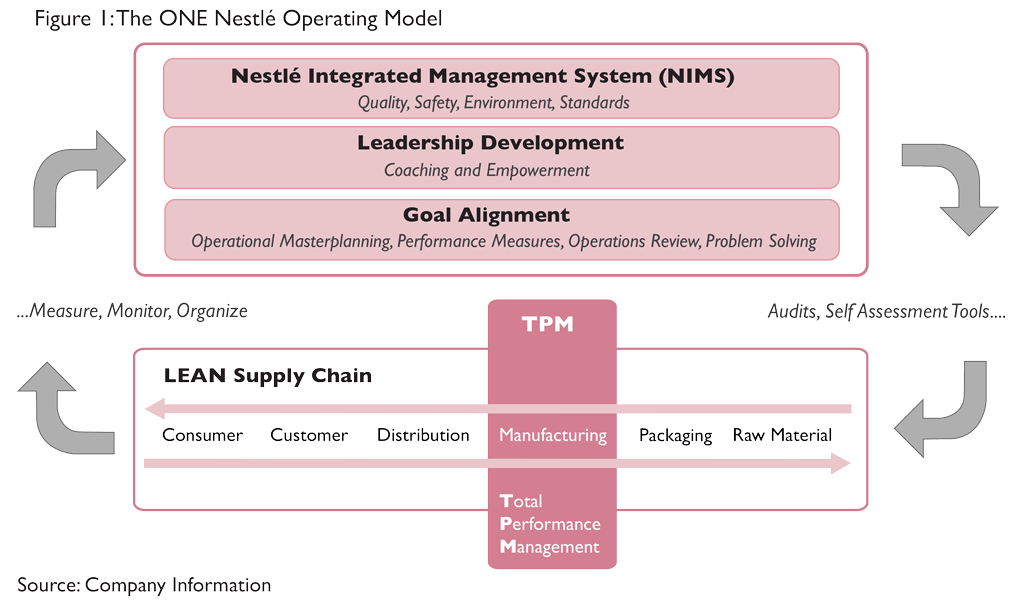
Quality Control and Customer-Centric BMP Enhancements
Ensuring consistent quality across Nestlé’s vast portfolio is a key priority. Through its BMP integration, Nestlé embedded quality control within its production workflows. Real-time monitoring tools within the BMP allow Nestlé to detect and address potential issues immediately, reducing product defects and maintaining high standards across all manufacturing sites.
Furthermore, customer service saw marked improvements following the BMP adoption. Nestlé created a streamlined ordering process, consolidating customer interactions into a single platform. This integration helped Nestlé improve order fulfillment times and respond more effectively to customer inquiries, enhancing overall satisfaction. The BMP-enabled service model reflects Nestlé’s commitment to customer-centric values, leveraging digital tools to create a seamless and efficient purchasing experience.
Conclusion
Nestlé’s journey with BMP stands as a benchmark in successful digital transformation for global manufacturers. From tackling operational inefficiencies to achieving financial savings and enhancing customer satisfaction, the BMP project has reshaped Nestlé’s business model, setting it apart as a leader in operational excellence and innovation. By implementing BMP across its vast network, Nestlé has not only bolstered its resilience in a competitive market but also reinforced its commitment to quality and sustainability.
For manufacturers looking to optimize operations, Nestlé’s BMP journey provides a compelling example of how a well-executed digital transformation can drive significant value across all aspects of a business.
Very interesting!